
The tooth implant healing process is the series of steps your body takes to accept a dental implant and restore function and appearance. It matters because successful healing prevents infection, ensures the implant bonds to bone, and sets the stage for a long-lasting crown. This guide explains typical timelines, normal symptoms versus warning signs, what affects healing, practical care tips, and what to expect at follow-up visits so you can recover with confidence.
The tooth implant healing process in Louisville: stage-by-stage timeline
Day 0–7: Immediate post-op
Expect some bleeding, swelling, and mild to moderate pain the first week. Your dentist will recommend pain meds and cold compresses. Eat soft foods, avoid spitting or using a straw to protect the initial clot, and follow any antibiotic or rinse instructions.
Weeks 2–8: Soft tissue healing
Gums begin to close around the implant. Sutures may be removed around 1–2 weeks. Keep the area clean with gentle rinses and soft-bristled brushes. Avoid aggressive rinsing or scrubbing the site to prevent disrupting healing tissue.
Months 3–6: Osseointegration (bone healing)
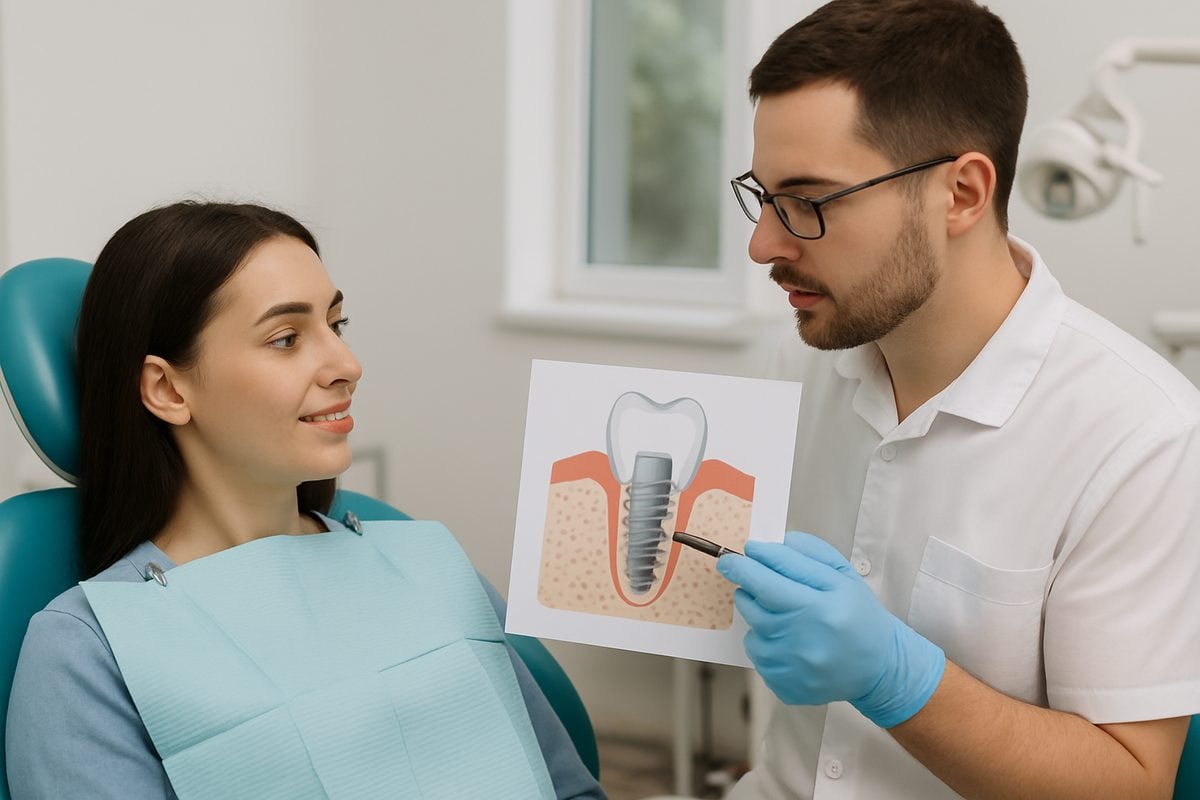
Bone grows and fuses to the implant — this osseointegration is the critical phase for long-term success. Avoid heavy chewing on the implant until your dentist confirms stable integration, usually via clinical checks and imaging.
After 6 months: Final restoration and long-term stability
Once osseointegration is confirmed, your dentist places the final crown or prosthesis. Regular hygiene and dental checkups maintain implant health for years.
Normal symptoms vs. warning signs to watch for
Normal, expected symptoms
Mild pain, swelling, minor bruising, and slight bleeding are common the first few days to weeks. These improve with prescribed pain medicine, ice, rest, and soft foods.
Warning signs — call your dentist
Contact your dentist if you have persistent severe pain, increasing swelling after day 3, fever, pus or foul taste, a loose implant, or new numbness. These may indicate infection, failed integration, or nerve issues that need prompt care.
Key factors that affect the tooth implant healing process
Smoking slows blood flow and raises infection risk. Diabetes and other medical conditions can delay healing — good glucose control helps. Medications like blood thinners or bisphosphonates require dental coordination. Poor bone quality or prior infections may need bone grafting. Implant type and position also affect healing complexity. Clinicians mitigate risks with careful planning, imaging, and pre-op management.
Practical tips to speed healing and protect your implant
Take medications as directed, use cold packs first 48 hours, and stick to a soft-food diet avoiding the implant side for a few weeks. Gently rinse with saltwater or prescribed rinse after 24 hours. Avoid tobacco and limit alcohol. Eat protein-rich foods and vitamin C to support tissue repair, but check supplements with your dentist or physician first.
What to expect at follow-up visits
Typical visits occur at 1 week, 4–8 weeks, and 3–6 months. Your dentist checks soft tissue healing, removal of sutures, and uses imaging (X-rays or CBCT) to evaluate osseointegration. Additional treatments like minor grafting or adjustments are done if needed.
Recovery timeline checklist: week-by-week at a glance
– Week 1: Rest, control bleeding, start gentle rinses. – Weeks 2–4: Reduce swelling, suture removal, continue soft foods. – Weeks 4–12: Soft tissue matures; limit chewing on site. – Months 3–6: Bone integration; imaging checks. – After 6 months: Final crown placement if healed; begin routine maintenance. Call your dentist for fever, severe pain, pus, or loose implant.
Why choose Harmon Dental Center for implants
Dr. Bradley Harmon brings advanced training, compassionate care, and years of implant experience. Harmon Dental Center in Louisville uses state-of-the-art tools — CBCT 3D imaging, Primescan digital impressions, Primemill milling, in-house 3D printing, and a full implant lab and surgical suite — to improve precision and reduce complications. These capabilities support a predictable tooth implant healing process in Louisville and better outcomes. Closing notes: Healing after an implant is a stepwise process you can support with careful home care and follow-up. If you have questions or need a personalized plan, schedule a consultation to discuss your tooth implant healing process and next steps.