

What Is the Dental Implant Process? A Step-by-Step Guide
If you are wondering, “What is the process for a dental implant?”, understanding the full treatment timeline can help you prepare for each stage with greater confidence.
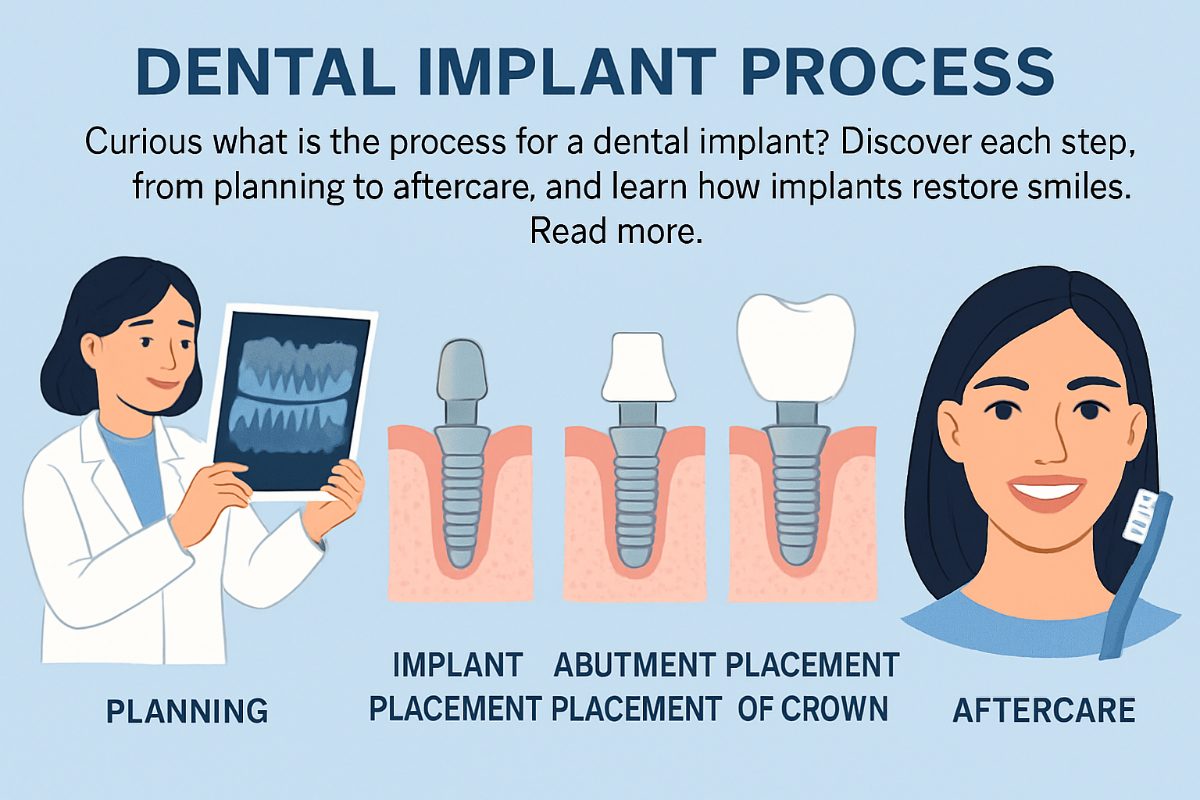
The dental implant process usually includes a comprehensive consultation, three-dimensional treatment planning, implant placement, a healing period, and attachment of the final replacement tooth. Some patients also need tooth extraction, bone grafting, periodontal treatment, or another preparatory procedure before the implant can be placed.
Although every treatment plan is different, this guide explains the most common dental implant steps, how long the process may take, what recovery involves, and which factors can affect the final result.
Patients considering treatment can also explore our complete overview of dental implants in Louisville, KY.
Important: The dental implant timeline must be personalized. Your oral health, jawbone, implant stability, healing response, and need for additional procedures will determine which steps are required and how long treatment takes.
What Is a Dental Implant?
A dental implant is a biocompatible post placed in the jawbone to replace the root portion of a missing tooth. Most implant posts are made from titanium, although other materials may be considered in selected situations.
A complete implant-supported tooth generally contains three components:
- The implant post: The portion positioned within the jawbone.
- The abutment: A connector attached to the top of the implant.
- The restoration: A crown, bridge, denture, or full-arch prosthesis that replaces the visible tooth or teeth.
After the implant is placed, the surrounding bone must form a stable connection with its surface. This biological healing process is called osseointegration.
Once adequate integration has occurred, the implant can support a custom restoration designed to restore appearance, chewing function, and bite stability.
Why Do Patients Choose Dental Implants?
Dental implants can be used to replace one missing tooth, several teeth, or a complete arch. For qualified patients, possible benefits include:
- A fixed and stable tooth-replacement option
- Improved chewing ability
- Replacement teeth designed to look natural
- Support for the jawbone in the treated area
- Reduced dependence on removable dentures or adhesives
- Replacement of one tooth without relying on adjacent teeth
- Improved denture retention
- Long-term function with appropriate maintenance
Implants are not the only treatment for missing teeth. Depending on your health, anatomy, goals, and budget, alternatives may include a traditional bridge or removable denture.
Who May Be a Candidate for Dental Implants?
Many adults with missing or nonrestorable teeth can be evaluated for implant treatment. Age alone is generally less important than overall health, gum health, available bone, and the ability to heal after surgery.
A potential candidate commonly:
- Has one or more missing or failing teeth
- Has healthy gums or receives treatment for gum disease
- Has enough bone to support an implant or qualifies for grafting
- Can safely undergo a surgical procedure
- Maintains appropriate oral hygiene
- Is willing to attend follow-up and maintenance visits
- Understands the risks, benefits, costs, timeline, and alternatives
Health conditions and medications
Your dentist will review your medical history, medications, allergies, previous surgeries, and history with anesthesia. Conditions that affect healing, blood clotting, bone metabolism, or immune function may require additional planning.
Factors that can influence implant treatment include:
- Uncontrolled diabetes
- Heavy tobacco or nicotine use
- Immune-system disorders
- Bleeding conditions or blood-thinning medication
- Medications that affect bone metabolism
- Previous radiation involving the head or neck
- Severe teeth grinding or clenching
Having one of these factors does not always prevent implant treatment. Medical coordination, risk reduction, or a modified treatment plan may be recommended.
Gum health
Healthy gum tissue is important because the gums and jawbone support the implant. Active periodontal infection should be treated before or as part of implant care.
Patients with bleeding gums, gum recession, or periodontal bone loss can learn more about our periodontal treatment options.
Jawbone support
The jaw must provide sufficient height, width, and density to support the planned implant. Bone can shrink after tooth loss or become damaged by infection, trauma, or periodontal disease.
When the available bone is insufficient, bone grafting or another preparatory procedure may be recommended.
The Dental Implant Process Step by Step
The exact sequence can vary, but most implant treatments follow the stages below.
Step 1: Initial dental implant consultation
The first step is a comprehensive consultation. During this appointment, the dental team reviews your concerns, treatment goals, dental history, medical conditions, medications, and previous tooth-replacement experiences.
Your dentist will examine:
- The missing or failing tooth
- The condition of neighboring teeth
- Your gums and supporting tissues
- Your bite and jaw relationship
- The space available for a replacement tooth
- Your current dentures or dental restorations
This appointment helps determine whether you may benefit from a single implant, implant-supported bridge, implant-retained denture, or fixed full-arch restoration.
Step 2: Dental X-rays and CBCT imaging
Diagnostic imaging allows the dentist to evaluate the jawbone and surrounding anatomy. A cone-beam computed tomography scan, commonly called a CBCT scan, creates a detailed three-dimensional view of the treatment area.
CBCT imaging can help the dental team:
- Measure the height and width of the jawbone
- Evaluate bone density and areas of bone loss
- Locate important nerves
- Assess the sinus cavities
- Examine nearby tooth roots
- Choose an appropriate implant size and position
- Determine whether grafting may be required
Three-dimensional planning is particularly important for implants placed near the maxillary sinuses or the nerve canal in the lower jaw.
Step 3: Digital impressions and restorative planning
A digital intraoral scanner can create an accurate three-dimensional model of your teeth, gums, bite, and available restorative space.
Digital records may be used to:
- Plan the location of the implant
- Design a surgical guide
- Create a temporary restoration
- Coordinate implant placement with the final crown
- Communicate with the dental laboratory
The implant should not simply be placed where bone is available. Its position must also support a comfortable, functional, and natural-looking final tooth.
Step 4: Creating a personalized treatment plan
After reviewing the examination and diagnostic records, the dentist develops a treatment plan based on your individual needs.
The plan should explain:
- Which teeth can be retained
- Which teeth may need extraction
- How many implants are recommended
- Where the implants will be placed
- Whether bone grafting is required
- Which temporary restoration may be used
- The expected healing timeline
- The type of final restoration
- Available anesthesia or sedation options
- The estimated cost and payment arrangements
You should receive an opportunity to ask questions and discuss alternatives before deciding whether to proceed.
Step 5: Preparatory treatment when necessary
Not every patient can proceed directly to implant surgery. The mouth may need to be prepared to create a healthier and more stable treatment site.
Possible preliminary procedures include:
- Removal of a damaged or infected tooth
- Bone grafting
- Socket preservation after an extraction
- Sinus augmentation for an upper-jaw implant
- Treatment of active periodontal disease
- Management of tooth decay or infection
Tooth extraction
If the tooth is still present but cannot be restored, it must be removed. Depending on the condition of the bone and infection level, the implant may be placed immediately or after the extraction site has healed.
Bone grafting
A bone graft may be recommended when the jaw does not provide enough support for the planned implant. Grafting material is placed in the deficient area to encourage the development of additional supporting tissue.
Minor grafting can sometimes be completed during implant placement. A larger graft may need several months to heal before the implant procedure continues.
Sinus augmentation
The upper back teeth are located near the maxillary sinus. When there is limited bone beneath the sinus, an augmentation procedure may be needed to create sufficient support for an implant.
Step 6: Selecting anesthesia or sedation
Local anesthesia is used to numb the implant site. Additional sedation or anesthesia may be considered based on the length and complexity of the procedure, your medical history, and your comfort needs.
Options may include:
- Local anesthesia
- Nitrous oxide
- Oral conscious sedation
- Intravenous sedation
Your clinical team will explain preparation instructions, transportation requirements, eating and drinking restrictions, medication adjustments, and what to expect after the appointment.
Learn more about available sedation dentistry options in Louisville.
Step 7: Dental implant placement surgery
During implant surgery, the treatment area is thoroughly numbed. The dentist creates access to the jawbone through the gum tissue and prepares the implant site using a carefully controlled sequence of instruments.
The implant is then positioned according to the treatment plan. Its angle, depth, and initial stability are evaluated before the surgical area is completed.
Depending on the case, the implant may receive:
- A cover screw beneath the gum tissue
- A healing abutment extending through the gums
- A temporary tooth when immediate loading is appropriate
The gum tissue may then be repositioned and secured with sutures.
Step 8: Post-operative recovery
Mild to moderate swelling, tenderness, bruising, minor bleeding, or jaw stiffness can occur after implant placement. These effects normally improve as the surgical area heals.
Your instructions may include:
- Taking prescribed or recommended medication
- Applying cold compresses during the initial recovery period
- Resting and limiting strenuous activity
- Eating soft foods
- Avoiding chewing directly on the implant site
- Cleaning the mouth as instructed
- Avoiding smoking and nicotine
- Attending scheduled follow-up appointments
Foods to eat after implant surgery
Early food options may include:
- Yogurt
- Applesauce
- Smooth soups
- Mashed potatoes
- Soft eggs
- Oatmeal
- Soft pasta
- Well-cooked vegetables
- Protein shakes
Avoid hard, crunchy, sticky, or chewy foods until the dental team confirms that the implant site can tolerate additional pressure.
Step 9: Healing and osseointegration
After placement, the implant must develop a stable connection with the jawbone. Osseointegration commonly requires several months, although healing time varies.
Factors that can affect the healing timeline include:
- The implant location
- Bone density and volume
- The stability achieved during surgery
- Whether grafting was performed
- The patient’s general health
- Smoking or nicotine use
- Oral hygiene
- Chewing pressure placed on the implant
Follow-up visits allow the dental team to monitor the gum tissue, surgical site, implant stability, bite, and temporary restoration.
For a closer look at this stage, read our guide to the tooth implant healing process.
Step 10: Exposing the implant when needed
If the implant healed beneath the gums, a brief procedure may be required to expose it. A healing component is then attached so the surrounding gum tissue can develop an appropriate contour.
This step is not necessary when a healing abutment was placed during the original surgery.
Step 11: Abutment placement
The abutment connects the implant post to the visible restoration. It extends through the gum tissue and creates the supporting platform for the crown, bridge, or implant prosthesis.
The dentist chooses the abutment according to:
- The position and angle of the implant
- The thickness and contour of the gums
- The available restorative space
- The location of the tooth
- The material and design of the final restoration
Step 12: Designing the implant crown
After healing, a new digital scan or impression records the implant position, surrounding gums, neighboring teeth, opposing teeth, and bite.
The crown is designed to provide:
- An accurate fit
- Appropriate contact with neighboring teeth
- Comfortable bite alignment
- Natural tooth shape and proportions
- A color that complements the surrounding smile
- Access for brushing and flossing
Patients can learn more about this restorative stage on our page about custom dental crowns and bridges.
Step 13: Final crown placement
The completed crown is attached to the abutment with a retaining screw or dental cement, depending on the design.
Before completing treatment, the dentist evaluates:
- The fit of the crown
- The bite and chewing pressure
- Contact with neighboring teeth
- The shape of the surrounding gums
- The appearance of the restoration
- The patient’s ability to clean around it
Minor adjustments may be made to improve comfort or prevent excessive pressure on the implant.
Can a Dental Implant Be Completed in One Day?
Some patients may receive an implant and temporary tooth during one appointment. This is called immediate placement or immediate loading, depending on which treatment stages are combined.
Same-day treatment may be considered when:
- The treatment site has suitable bone
- The implant achieves adequate initial stability
- Active infection is controlled
- Bite forces can be managed
- The patient can follow dietary restrictions
The tooth received on the day of surgery is often temporary. The implant must still complete the osseointegration process before the permanent crown is placed.
If adequate stability cannot be achieved, allowing the implant to heal without immediate chewing pressure may provide a safer approach.
How Long Does the Dental Implant Process Take?
A straightforward single-tooth implant may take several months from consultation through final crown placement. More complex treatment can take longer.
The timeline may be extended by:
- Tooth extraction
- Active infection
- Bone grafting
- Sinus augmentation
- Periodontal treatment
- Delayed healing
- Multiple implants
- A full-arch restoration
Your dentist should provide a personalized schedule showing when surgery, healing evaluations, restorative scans, and final tooth placement are expected.
Is Dental Implant Surgery Painful?
Local anesthesia is used to numb the surgical area. Patients may notice pressure, vibration, or movement during treatment but should not experience sharp pain.
After surgery, temporary soreness and swelling are common. Discomfort can often be managed with the medication and care instructions provided by the dental team.
Individual experiences vary according to the number of implants, need for extraction or grafting, length of surgery, anesthesia used, and personal healing response.
When Should You Call the Dentist?
Contact the dental office promptly if you experience:
- Bleeding that does not improve
- Pain or swelling that becomes significantly worse
- Fever or other signs of infection
- Drainage or an unusual taste from the surgical area
- Persistent numbness beyond the expected period
- A loose healing component or temporary tooth
- A sudden change in the bite
- Difficulty breathing or swallowing
- An unexpected reaction to medication
Early evaluation can help the dental team address a potential problem before it places additional stress on the implant or surrounding tissues.
Dental Implant Risks and Possible Complications
Dental implant surgery has potential risks even when it is carefully planned. Possible complications include:
- Infection
- Delayed healing
- Failure of the implant to integrate
- Injury or irritation involving a nearby nerve
- Sinus-related complications
- Gum recession
- Bone loss around the implant
- Loosening of an abutment or restorative screw
- Chipping or fracture of the crown
- Food trapping around the restoration
- Excessive bite pressure
- The need for additional treatment
Three-dimensional imaging, careful case selection, appropriate implant positioning, quality restorative work, and consistent maintenance can help reduce risk but cannot eliminate it completely.
How Successful Are Dental Implants?
Dental implants are widely used as a long-term tooth-replacement option, but individual outcomes vary. Successful treatment depends on more than the surgical appointment alone.
Factors that support a favorable result include:
- Appropriate diagnosis and treatment planning
- Adequate bone and gum health
- Accurate implant placement
- Good initial implant stability
- Properly designed bite contacts
- Consistent oral hygiene
- Avoidance of smoking and nicotine
- Management of grinding or clenching
- Regular professional examinations and cleanings
How Do You Care for a Dental Implant?
The implant and artificial crown cannot develop cavities, but plaque can still affect the surrounding gums and bone. Daily cleaning and professional maintenance are essential.
Long-term implant care generally includes:
- Brushing at least twice daily
- Cleaning between the implant and neighboring teeth
- Using floss, interdental brushes, or a water flosser as recommended
- Attending routine dental examinations and cleanings
- Wearing a protective nightguard when prescribed
- Avoiding chewing ice and other extremely hard objects
- Reporting bleeding, movement, discomfort, or bite changes
Your dental team may recommend specialized hygiene tools based on the location and design of your implant restoration.
How Long Do Dental Implants Last?
Dental implants are designed for long-term use, but neither the implant nor its restoration can be guaranteed to last for life.
Longevity may be affected by:
- Oral hygiene
- Gum and bone health
- Smoking or nicotine use
- Medical conditions
- Implant position
- Grinding and bite pressure
- Restorative materials
- Professional maintenance
The implant post and crown also have different maintenance needs. The crown, abutment, or retaining screw may eventually require adjustment, repair, or replacement even when the implant remains integrated.
How Much Does the Dental Implant Process Cost?
The cost of implant treatment varies because each plan includes different surgical and restorative requirements.
Factors that can affect the total cost include:
- The number of missing teeth
- The number of implants required
- Examinations and diagnostic imaging
- Tooth extractions
- Bone grafting or sinus treatment
- The implant and abutment components
- The crown or prosthetic material
- Temporary restorations
- Anesthesia or sedation
- Dental laboratory services
- Follow-up care
Request a written estimate that clearly explains which stages are included. Visit our dental implant cost and affordability page for additional information.
Does Insurance Cover the Dental Implant Process?
Dental insurance coverage varies by plan. Some policies may contribute toward examinations, imaging, extractions, grafting, crowns, or other portions of treatment while limiting or excluding the implant itself.
Coverage may be affected by:
- Annual maximums
- Deductibles
- Waiting periods
- Missing-tooth clauses
- Preauthorization requirements
- Alternative-treatment provisions
A benefits estimate is not a guarantee of payment. Review the expected patient responsibility before treatment begins.
Dental Implant Financing Options
Qualified patients may be able to divide treatment costs into monthly payments through third-party financing. Eligible expenses may also be paid with health savings account or flexible spending account funds.
Before selecting a financing arrangement, review:
- The estimated monthly payment
- Interest rates
- Promotional financing periods
- Down-payment requirements
- Approval criteria
- Late-payment terms
Explore Harmon Dental Center’s insurance and dental financing resources.
How Technology Supports the Dental Implant Process
Modern technology helps coordinate diagnosis, surgical placement, crown design, and laboratory fabrication.
CBCT imaging
Three-dimensional CBCT imaging provides detailed information about the jawbone, tooth roots, nerves, and sinus cavities.
Primescan® digital impressions
Digital scanning creates a detailed model of the teeth and gums without relying entirely on conventional impression trays and material.
Digital implant planning
Planning software allows the proposed implant to be evaluated in relation to the available bone and the position of the future replacement tooth.
Computer-designed surgical guides
A customized surgical guide may assist the dentist in transferring the digital plan to the mouth during implant placement.
Primemill® in-office milling
In-office milling technology can support the fabrication of selected dental restorations and restorative components.
In-house 3D printing
Three-dimensional printing may be used to create dental models, surgical guides, temporary restorations, and other treatment components.
On-site dental laboratory
An in-house laboratory can support direct communication between the dentist and technical team while allowing greater control over selected restorative stages.
Learn more about these resources on our state-of-the-art dental laboratory page.
Why Choose Harmon Dental Center for Dental Implants?
Dental implant treatment combines surgical planning, restorative dentistry, bite management, laboratory work, and long-term maintenance. Harmon Dental Center provides coordinated implant care in one Louisville practice.
Available implant resources include:
- Three-dimensional CBCT imaging
- Primescan® digital impressions
- Digital implant planning
- Primemill® in-office milling
- In-house 3D printing
- An on-site implant laboratory
- Private surgical facilities
- Multiple sedation options
- Customized implant restorations
You can learn more about Dr. Bradley Harmon’s training and professional background.
Questions to Ask at Your Implant Consultation
Consider bringing the following questions to your appointment:
- Am I a candidate for dental implants?
- How many implants do I need?
- Do I need an extraction or bone graft?
- Which implant system will be used?
- What type of temporary tooth will I have?
- How long should my treatment take?
- Which anesthesia or sedation options are available?
- Who will perform each stage of treatment?
- Who will create my final crown or prosthesis?
- What risks apply to my case?
- What is included in the written estimate?
- What maintenance will my restoration require?
Frequently Asked Questions About the Dental Implant Process
What are the main steps of a dental implant?
The most common steps include consultation, diagnostic imaging, treatment planning, preparatory care when necessary, implant surgery, osseointegration, abutment placement, crown design, and delivery of the final restoration.
How long does a dental implant take from start to finish?
The complete process often takes several months. Cases involving bone grafting, infection, multiple implants, or extensive restorative treatment may require additional time.
Can the implant and crown be placed at the same appointment?
Some patients may receive an implant and temporary tooth during one visit. A permanent crown is usually placed after healing unless the clinical circumstances support another approach.
Will I be without a tooth while the implant heals?
Temporary options may include a removable appliance, temporary bridge, or fixed provisional tooth. The appropriate choice depends on the location, implant stability, bite, and treatment plan.
Is dental implant surgery painful?
The area is numbed with local anesthesia, and additional sedation may be available. Temporary soreness and swelling can occur after surgery.
Do stitches need to be removed?
Some sutures dissolve on their own, while others must be removed at a follow-up visit. Your dental team will explain which type was used.
How soon can I return to work?
Recovery time varies according to the extent of surgery, type of work, anesthesia, and individual healing response. Patients undergoing a simple procedure may require less downtime than those receiving multiple implants, extractions, or grafting.
Can an implant fail during healing?
Yes. An implant may fail to integrate because of infection, limited bone support, health factors, nicotine use, excessive pressure, or other causes. Your dentist will explain how the area can be treated if integration does not occur.
Can older adults receive dental implants?
Many older adults may qualify. General health, bone support, healing ability, and capacity to maintain the restoration are often more important than chronological age.
Can dental implants get cavities?
The implant and artificial crown cannot decay like a natural tooth. However, plaque can still cause inflammation and bone loss around the implant.
Schedule a Dental Implant Consultation in Louisville, KY
A personalized consultation is the best way to learn which dental implant steps apply to your specific situation. The Harmon Dental Center team can examine your oral health, review three-dimensional imaging, explain your treatment options, and provide an individualized timeline and cost estimate.
Bring a current medication list, relevant medical information, previous dental records, and any existing treatment proposals to your appointment.
Take the next step toward restoring your smile with a stable, natural-looking tooth replacement. Contact Harmon Dental Center or call (502) 325-3994 to request your dental implant consultation in Louisville, KY.