
Molar Implant Procedure: What to Expect When Replacing a Back Tooth
A missing molar can affect much more than the appearance of your smile. Because molars are responsible for crushing and grinding food, losing one can reduce chewing efficiency, alter your bite, and place additional pressure on the surrounding teeth.
A molar dental implant replaces the missing tooth from the root upward. The implant post is positioned in the jawbone, where it creates a stable foundation for an abutment and custom dental crown.
For qualified patients, this treatment can provide a durable, fixed alternative to leaving the space untreated or relying on a removable restoration. This guide explains each stage of the molar implant procedure, including planning, surgery, healing, crown placement, recovery, cost, and long-term care.
Patients considering treatment can also explore our complete guide to dental implants in Louisville, KY.
What Is a Molar Dental Implant?
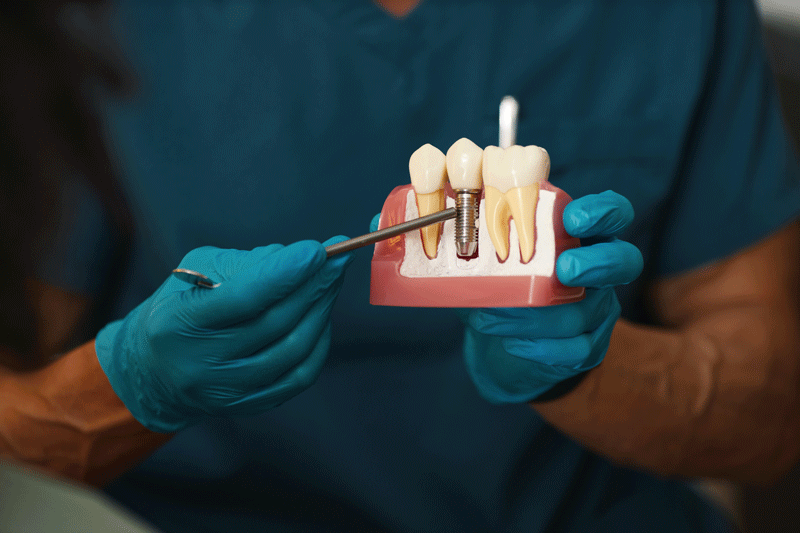
A molar implant is a tooth-replacement system designed to restore a missing premolar or molar in the back of the mouth. A complete implant restoration usually contains three parts:
- The implant post: A biocompatible post placed within the jawbone to replace the missing tooth root.
- The abutment: A connecting component that attaches the implant to the visible restoration.
- The implant crown: A custom-made replacement tooth designed to restore the shape and function of the missing molar.
Unlike a traditional dental bridge, a single implant generally does not require the neighboring healthy teeth to be reshaped for support. The restoration stands independently and transfers chewing pressure into the jawbone through the implant post.
Why Is Replacing a Missing Molar Important?
Because molars are located toward the back of the mouth, patients sometimes assume that replacing one is unnecessary. However, an untreated space can gradually affect the position and function of the entire bite.
Possible consequences of a missing molar include:
- Reduced ability to chew certain foods
- Shifting or tilting of neighboring teeth
- Overeruption of the tooth opposite the empty space
- Uneven distribution of biting pressure
- Food trapping between nearby teeth
- Changes in the alignment of the bite
- Gradual loss of jawbone in the area
- Additional wear on the remaining teeth
Replacing the tooth can restore contact within the bite, improve chewing balance, and help protect the surrounding dental structures.
Who Is a Candidate for a Molar Implant?
Candidacy depends on the condition of your mouth, the available jawbone, your medical health, and your ability to heal after surgery.
A suitable candidate commonly:
- Has one or more missing or nonrestorable back teeth
- Has adequate bone to support an implant
- Has healthy gums or receives treatment for active gum disease
- Does not have an uncontrolled medical condition that impairs healing
- Maintains appropriate oral hygiene
- Is willing to attend follow-up and maintenance appointments
- Understands the treatment timeline and possible risks
Smoking, uncontrolled diabetes, severe teeth grinding, certain medications, and conditions affecting bone metabolism can increase treatment risks. These factors do not always prevent implant placement, but they require careful evaluation and planning.
How Is a Molar Implant Planned?
The molar implant process begins with a comprehensive consultation. During this appointment, the dental team evaluates the missing tooth, adjacent teeth, gums, bite, jawbone, and overall oral health.
Planning may include:
- A review of your dental and medical history
- Digital dental X-rays
- Three-dimensional CBCT imaging
- A digital impression or scan of your teeth
- An evaluation of the available restorative space
- An assessment of your bite and chewing forces
- A discussion of anesthesia or sedation options
This information helps the dentist choose an appropriate implant length, width, angle, and position. The implant must be placed where it can obtain stable support while avoiding important anatomical structures.
Planning an upper molar implant
Upper molars are located near the maxillary sinus. If bone height has decreased in this area, a sinus-related grafting procedure may be recommended before or during implant placement.
Planning a lower molar implant
Lower molars may be located near the mandibular nerve canal. Three-dimensional imaging helps the dentist evaluate the available bone and maintain an appropriate distance from the nerve.
The Molar Implant Procedure Step by Step
Although every treatment plan is personalized, a molar tooth implant generally follows several main stages.
Step 1: Treating infection or gum disease
Active infection must be addressed before or during implant treatment. If the missing tooth was affected by periodontal disease, the surrounding gum and bone health must be carefully evaluated.
Patients with inflammation or bone loss may first need periodontal treatment to establish a healthier environment for implant placement.
Step 2: Removing the damaged tooth
If the molar is still present but cannot be restored, it must be extracted. The dentist carefully removes the tooth while attempting to preserve as much supporting bone as possible.
Depending on the condition of the site, the implant may be placed:
- At the same appointment as the extraction
- After a short period of soft-tissue healing
- After a bone graft has healed
Immediate implant placement is not appropriate in every case. Infection, inadequate bone, the shape of the extraction socket, or inability to obtain implant stability may make a staged approach safer.
Step 3: Bone grafting when necessary
Bone can shrink after a tooth is lost or become damaged by infection and periodontal disease. A bone graft may be recommended when the remaining bone cannot adequately support the planned implant.
Grafting material is placed in the deficient area to encourage the formation of additional supporting bone. Minor grafting can sometimes be completed at the same time as implant placement. More extensive grafting may require a separate healing period.
Step 4: Numbing or sedating the patient
Local anesthesia is used to numb the treatment area. Additional sedation may be considered for patients with dental anxiety, a strong gag reflex, difficulty becoming numb, or a more complex surgical plan.
Harmon Dental Center provides several sedation dentistry options. The appropriate approach depends on your medical history, comfort needs, and procedure.
Step 5: Preparing the implant site
The dentist creates access to the jawbone through the gum tissue. A carefully controlled sequence of instruments is then used to prepare the implant site to the planned depth and width.
Digital treatment planning and three-dimensional imaging help guide the position and angle. In some cases, a custom surgical guide may be used to assist with placement.
Step 6: Placing the implant post
The dental implant is positioned within the prepared site. The dentist evaluates its initial, or primary, stability before completing the surgical stage.
Depending on the treatment plan, the implant may receive:
- A cover screw beneath the gum tissue
- A healing abutment that extends through the gums
- A temporary restoration when immediate loading is clinically appropriate
The gum tissue is then repositioned and secured when necessary.
Step 7: Allowing osseointegration
After placement, the implant enters a healing stage known as osseointegration. During this process, the jawbone forms a stable connection with the implant surface.
Healing commonly requires several months, although the exact timeline depends on:
- The location of the implant
- Bone density and volume
- The stability achieved during surgery
- Whether grafting was completed
- The patient’s general health
- Smoking or nicotine use
- Chewing forces placed on the area
Patients should avoid chewing hard foods directly on the implant site during the early healing period unless instructed otherwise.
Step 8: Attaching the abutment
Once the implant has integrated successfully, an abutment is connected to it. The abutment passes through the gum tissue and creates the supporting connection for the implant crown.
If the implant healed beneath the gums, a brief procedure may be needed to expose it before the abutment is placed. The surrounding gum tissue may then need time to heal and develop the desired contour.
Step 9: Designing the molar crown
A digital scan or impression records the implant position, neighboring teeth, opposing teeth, and bite. The laboratory uses this information to design a crown that fits the available space and functions appropriately during chewing.
Because molars withstand substantial pressure, the crown must provide an appropriate balance of strength, shape, cleansability, and bite contact.
Learn more about the restorative phase on our page about custom dental crowns and bridges.
Step 10: Placing the final implant crown
The finished crown is attached to the abutment with dental cement or a retaining screw, depending on the restorative design.
The dentist checks:
- The fit of the crown
- Contact with neighboring teeth
- The bite and chewing pressure
- The shape of the surrounding gum tissue
- Access for brushing and flossing
- The overall appearance of the restoration
Adjustments may be made to prevent excessive pressure from being directed onto the implant.
How Long Does the Molar Implant Process Take?
The total timeline varies. A straightforward case with adequate bone may progress more quickly than treatment requiring extraction, infection management, or bone grafting.
A typical process may involve:
- Consultation and diagnostic imaging
- Extraction or grafting when necessary
- Implant placement
- Several months of healing and osseointegration
- Abutment placement and restorative records
- Delivery of the final crown
Some stages can occasionally be combined. However, faster treatment is only recommended when the bone, implant stability, and surrounding tissues support it.
What Is Recovery Like After Molar Implant Surgery?
Patients commonly experience mild to moderate soreness, swelling, bruising, or minor bleeding after implant placement. These effects usually improve as the surgical area heals.
Your post-operative instructions may include:
- Taking prescribed or recommended medication
- Applying cold compresses during the initial recovery period
- Eating soft foods
- Avoiding chewing on the surgical site
- Keeping the area clean as directed
- Avoiding smoking and nicotine
- Limiting strenuous activity temporarily
- Attending scheduled follow-up appointments
Foods to eat after implant placement
Early food choices may include:
- Yogurt
- Applesauce
- Mashed potatoes
- Soft eggs
- Oatmeal
- Smooth soups
- Soft pasta
- Well-cooked vegetables
- Protein shakes consumed without a straw when instructed
Avoid hard, crunchy, sticky, or excessively chewy foods until the dental team confirms that the area is ready for them.
When Should You Contact the Dentist?
Some tenderness and swelling are expected, but contact the office when you experience:
- Bleeding that does not improve
- Pain or swelling that becomes significantly worse
- Fever or symptoms of infection
- Persistent numbness beyond the expected period
- A loose healing component or temporary restoration
- An unusual taste or drainage from the surgical area
- Difficulty breathing or swallowing
- An unexpected reaction to medication
Prompt evaluation allows the dental team to identify and manage a potential complication before it becomes more serious.
Benefits of Replacing a Molar With an Implant
Improved chewing ability
Molars are designed to tolerate significant biting pressure. Replacing a missing back tooth can improve the ability to break down foods and help distribute chewing forces more evenly.
Preservation of neighboring teeth
A single implant is supported by the jaw rather than adjacent teeth. This can avoid the need to reshape otherwise healthy teeth for a conventional bridge.
Support for bite alignment
Filling the empty space helps discourage neighboring teeth from drifting or tilting. It can also help prevent the opposing tooth from moving farther into the space.
Jawbone stimulation
The implant transfers functional pressure into the surrounding bone. This stimulation may help maintain bone in the treated area, although normal changes in bone and gum tissue can still occur over time.
A fixed restoration
An implant crown remains attached in the mouth and does not need to be removed for daily cleaning. Many patients appreciate the stability and convenience of a fixed replacement.
Long-term value
Dental implants are designed for long-term use. Longevity varies based on health, hygiene, bite forces, habits, implant position, and professional maintenance.
Possible Risks of a Molar Implant
Dental implant surgery has potential risks, even when it is carefully planned and performed. These may include:
- Infection
- Delayed healing
- Failure of the implant to integrate
- Injury or irritation involving a nearby nerve
- Sinus-related complications with upper molars
- Gum recession
- Bone loss around the implant
- Loosening of the abutment or retaining screw
- Chipping or fracture of the crown
- Food trapping around the restoration
- Excessive biting pressure
- The need for additional surgery or restorative treatment
A thorough examination and precise planning can help reduce risk but cannot eliminate it completely.
How Do You Care for a Molar Implant?
An implant crown cannot develop a cavity, but plaque and bacteria can still affect the surrounding gum and bone. Daily cleaning and regular professional maintenance are essential.
Recommended care may include:
- Brushing twice daily with a soft-bristled toothbrush
- Cleaning between the implant and adjacent teeth
- Using floss, an interdental brush, or a water flosser as recommended
- Attending regular dental examinations and cleanings
- Wearing a nightguard when prescribed for grinding or clenching
- Avoiding chewing ice or other extremely hard objects
- Reporting movement, discomfort, bleeding, or changes in the bite
Cleaning around a molar implant is especially important because its location can make plaque removal more difficult.
How Much Does a Molar Implant Cost?
The cost of a molar implant varies according to the clinical and restorative requirements of the case.
The total estimate may be affected by:
- Diagnostic imaging
- Tooth extraction
- Bone grafting or sinus treatment
- The implant and abutment
- The crown material and design
- Sedation or anesthesia
- Laboratory services
- Temporary restorations
- Follow-up care
An examination and three-dimensional imaging are generally needed before an accurate treatment estimate can be prepared. Visit our dental implant cost and affordability page for additional information.
Why Choose Harmon Dental Center for a Molar Implant?
Molar implant treatment requires coordination between surgical placement, restorative design, bite management, and laboratory fabrication. Harmon Dental Center provides these services with advanced diagnostic and restorative resources in Louisville.
Our implant capabilities include:
- Three-dimensional CBCT imaging
- Digital impressions
- Detailed implant treatment planning
- An on-site dental laboratory
- In-house milling and 3D-printing capabilities
- Multiple sedation options
- Customized implant crowns and restorations
Our state-of-the-art dental laboratory supports communication between the clinical and restorative stages of treatment.
You can also learn more about Dr. Bradley Harmon’s training and professional background.
Frequently Asked Questions About Molar Implants
Is a molar implant painful?
Local anesthesia is used during implant placement to numb the treatment area. Pressure or vibration may be felt, but sharp pain should not occur. Soreness and swelling can develop afterward and are managed with individualized post-operative instructions.
Can an implant replace any missing molar?
Many missing molars can be replaced with implants, but sufficient space, bone, gum health, and distance from nearby nerves or sinuses are required. Three-dimensional imaging helps determine whether treatment is appropriate.
Can a molar implant and crown be completed in one day?
In selected cases, an implant and temporary restoration may be placed during one appointment. A permanent crown is usually delayed until the implant has achieved sufficient integration and the tissues are stable.
Do I need a bone graft before a molar implant?
Not every patient needs grafting. A graft may be recommended when bone width, height, or density is insufficient to support the planned implant safely.
How long does a molar implant last?
Implants are intended as a long-term treatment, but no restoration lasts forever. Longevity depends on oral hygiene, health, implant position, bite forces, smoking, grinding, restorative materials, and professional maintenance.
Can I chew normally with a molar implant?
After the implant has healed and the final crown has been placed, it is designed to support normal chewing. Patients should still avoid using the implant crown to crack ice, hard candy, shells, or other objects.
What happens if I do not replace a missing molar?
The surrounding teeth may gradually shift, the opposing tooth may move into the space, and chewing pressure may become less balanced. The amount and speed of change vary from patient to patient.
Is an implant better than a bridge for a missing molar?
Both treatments can be appropriate. An implant does not normally require reshaping adjacent teeth, while a bridge may be completed without implant surgery. Bone, health, cost, treatment time, and the condition of neighboring teeth all influence the decision.
Schedule a Molar Implant Consultation in Louisville, KY
If a missing or failing molar is affecting your comfort, chewing ability, or confidence, a personalized implant evaluation can help you understand your options.
During your consultation, the Harmon Dental Center team can assess your teeth, gums, bite, and jawbone; review the expected timeline; and provide a treatment plan based on your individual needs.
Take the next step toward restoring your bite with a stable, natural-looking replacement tooth. Contact Harmon Dental Center or call (502) 325-3994 to request a molar implant consultation in Louisville, KY.