
If you’ve ever heard someone call implants screw in teeth, they’re not far off. Picture biting into a crisp apple without wondering if your partial will pop loose, or laughing at dinner without pressing your tongue against your upper teeth. That’s what screw-in teeth, the everyday name for dental implants, can do, and they’re a lasting alternative to traditional dentures or bridges.
At Harmon Dental Center in Louisville, KY, we’ve been placing implants for over two decades, for single teeth and full arches. This guide walks you through how screw-in teeth work and what to expect.
What Screw-In Teeth Really Are
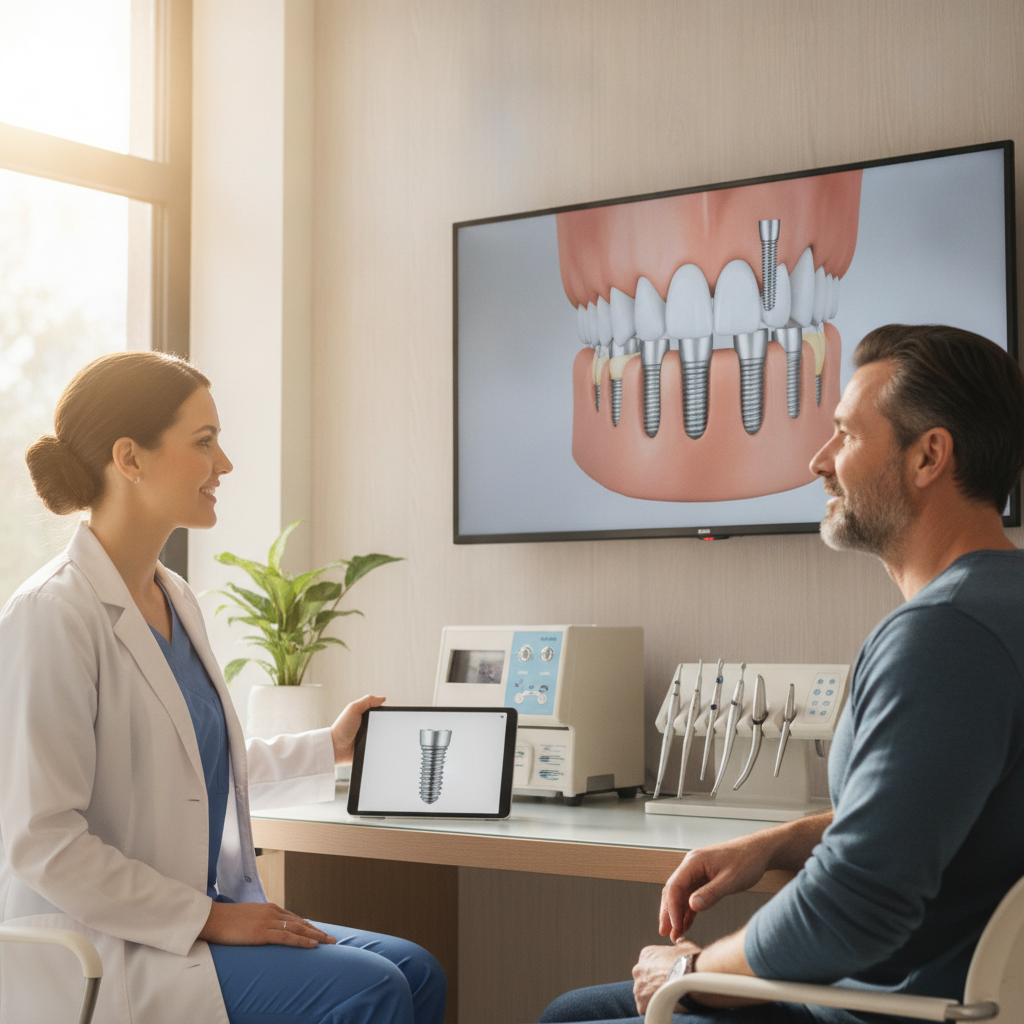
Screw-in teeth, or dental implants, are artificial tooth roots that hold fixed or removable replacement teeth. The name comes from the shape of the implant post, which looks a bit like a small screw. Once it’s placed in the bone, your new tooth attaches on top.
Unlike dentures, screw-in teeth don’t move or shift. That means no adhesive, no clicking, and no worrying about your teeth when you’re talking with friends.
How Screw-In Teeth Work
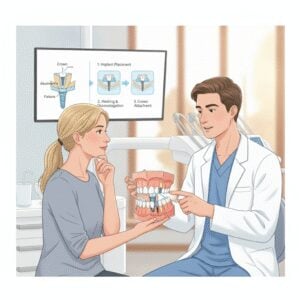
Implants are usually made of titanium, a biocompatible metal that fuses with your jawbone over a few months. Once bonded, the implant becomes a secure anchor for a crown, a bridge, or full-arch solutions that mimic the roots of natural teeth.
That bond with the bone is also what protects your jaw. When a tooth is lost, the bone underneath starts to shrink. An implant gives it something to hold onto again.
Types of Screw-In Teeth We Offer
At Harmon Dental Center, we match the type of implant to what you’re missing. These options replace teeth and help protect the shape of your face by preventing bone loss.
Single Tooth Implants
If you’re missing one tooth, a single implant holds a crown that restores how the tooth looks and works. It also keeps neighboring teeth from drifting into the gap.
All-on-X Full-Arch Implants
All-on-X supports a full arch of teeth on as few as four implants, sometimes up to six. It’s a good fit if you need to replace most or all of your teeth without an implant for every single one, which means fewer implants and less treatment overall.
What to Expect From the Implant Procedure
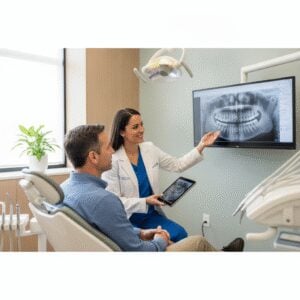
It starts with a consultation and 3D imaging so your treatment is planned around your bone and bite. On surgery day, implants are placed with local anesthesia or IV sedation, so you stay comfortable. Afterward, our team gives you clear instructions to help you heal well.
Many All-on-X patients leave with temporary teeth the same day, then get their final teeth once the implants have healed.
Screw-In Teeth vs. Dentures in Daily Life
With a traditional denture, your teeth rest on your gums. They can feel bulky, rub sore spots, and slip when you cough, sneeze, or bite into something firm. Every night they come out to soak, and many people avoid sticky or crunchy foods altogether.
Screw-in teeth work differently because they’re anchored in bone. You brush them like natural teeth; you don’t need adhesive, and you can eat the foods you’ve been skipping. Harmon Dental Center also offers implant-supported dentures for people who want a removable option that still snaps securely in place.
Comfort and Careful Planning
Dental work can feel intimidating, especially if it’s been a while. Harmon Dental Center offers IV sedation and other anesthesia options to help you relax, plus comforts like noise-canceling headphones and ceiling TVs. Our team’s training and modern tools help keep each step precise.
What Helps Screw-In Teeth Last
Implant success depends on careful planning and good care afterward. Our team uses CBCT imaging and digital scans to evaluate your bone density, gum health, and implant location before we begin, and we’ll talk about habits like smoking that can affect healing.
Is It Worth It?
If the price of implants makes you hesitate, that’s understandable. It helps to compare them with the cost of living with a missing tooth or an uncomfortable denture: relines, adhesives, repairs, and the foods you keep skipping. For many patients at Harmon Dental Center, getting back a tooth that feels like their own is worth every step.
Cost of Screw-In Teeth
The cost depends on how many implants you need, the type of implant, and whether you need extra procedures like extractions or bone grafting. We give you a clear estimate and walk you through insurance coverage and flexible financing so you can plan with confidence.
FAQs About Screw In Teeth
How long do dental implants last?
With good care, dental implants can last for decades, making them a long-term investment in your health.
Is the procedure painful?
Most patients find it manageable with anesthesia and feel only mild soreness afterward.
What is the recovery time?
The first few days are the main recovery, but full osseointegration takes several months.
Can I eat normally with implants?
Yes. Once healed, implants work like natural teeth, so you can enjoy your favorite foods.
How do I care for my implants?
Brush and floss every day and keep regular dental check-ups so we can catch small issues early.
A Smile That Stays Put
You deserve teeth you don’t have to think about. Schedule a consultation with Harmon Dental Center in Louisville, KY, and take the first step toward screw in teeth that feel like your own.