
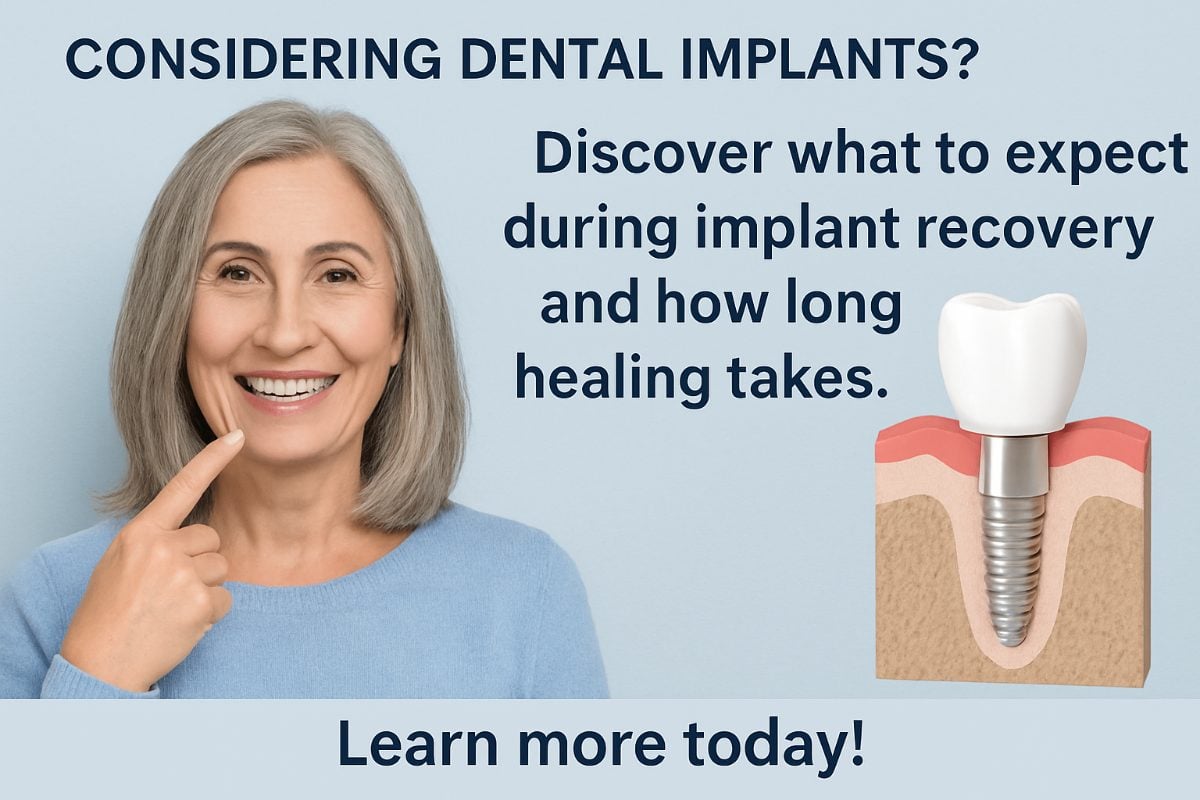
If you’re considering dental implants in Louisville, this article explains what to expect during implant recovery and how long healing usually takes. You’ll learn a simple day-by-day care plan, common symptoms that are normal versus warning signs, factors that change recovery time, and how modern technology can speed healing.
“Implant recovery” means the soft-tissue healing and the longer process called osseointegration, when the implant fuses to your bone. Read on to set realistic expectations for dental implants in Louisville and plan your recovery with confidence.
Typical Recovery Timeline After Dental Implants In Louisville
Recovery varies by patient and procedure, but most people follow a similar timeline:
- Immediate Recovery (First 24–72 Hours): Expect swelling, minor bleeding, and controlled pain. Follow your dentist’s medication plan and rest.
- First Week: Soft-tissue healing begins. Eat soft foods, avoid disturbing the site, and return for any suture removal if needed.
- Two–Six Weeks: Gums mature and comfort improves. You can usually return to most normal activities and a regular diet as tolerated.
- Three–Six+ Months: Osseointegration happens—this is when the implant bonds to your jawbone. Final crowns or bridges are placed after your dentist confirms stable healing.
Day-By-Day Care: What To Do During Implant Recovery
Early care protects the implant and speeds healing. Follow these practical tips:
- First 48 Hours: Use cold compresses for 15–20 minutes on and off to reduce swelling. Rest and avoid heavy lifting. Take prescribed pain meds and antibiotics exactly as directed.
- Oral Hygiene: Keep your mouth clean but gentle. Rinse with warm salt water starting 24 hours after surgery, brush other teeth normally, and avoid brushing the surgical site aggressively.
- Eating and Drinking: Stick to soft foods and liquids for the first week. Sample day-one to day-seven meal plan:
- Day 1–2: Broth, yogurt, smoothies (no straws), mashed potatoes
- Day 3–5: Scrambled eggs, oatmeal, soft pasta
- Day 6–7: Soft fish, cooked vegetables, soft sandwiches
- Activity and Work: Most patients can return to desk work in 1–3 days. Avoid vigorous exercise for 1–2 weeks or until swelling and bleeding have stopped.
Common Symptoms And When They Are Normal Versus Concerning
Knowing what’s normal helps you avoid unnecessary worry during implant recovery.
- Normal Signs: Mild to moderate pain controlled by medication, swelling, light bleeding or oozing, minor bruising, and temporary numbness.
- Warning Signs: Severe or worsening pain after a few days, fever over 100.4°F, heavy or persistent bleeding, pus or foul taste, or a loose implant. These may indicate infection or implant failure.
If you see warning signs, contact your dentist right away. For severe symptoms—high fever, heavy bleeding, or trouble breathing—seek emergency care.
Factors That Affect Recovery Time For Dental Implants In Louisville
Several things change how fast you heal:
- Patient Factors: Age, smoking, uncontrolled diabetes, certain medications, and oral hygiene habits can slow healing and increase risk.
- Procedure Complexity: A single-tooth implant usually heals faster than multiple implants or full-arch cases that need more surgery.
- Surgical Approach and Sedation: Minimally invasive, guided placement with local anesthesia has faster recovery than extensive surgery under IV sedation. Sedation choice mainly affects comfort during the day of surgery.
- Bone Quality and Grafting: If you need a bone graft, healing time lengthens because the graft must integrate before the implant site is fully stable.
How Modern Technology Can Speed Healing And Improve Implant Recovery
New tools reduce surgery time and trauma, which helps implant recovery:
- CBCT Imaging and 3D Planning: Precise 3D scans show bone and nerve locations so implants are placed more safely and accurately.
- 3D Surgical Guides: Guides help place implants exactly where planned, reducing surgical time and tissue damage.
- Same-Day Restorations and In-Office Milling: Chairside milling and same-day crowns mean fewer appointments and less time with temporary teeth, lowering overall stress on recovery.
- Guided Surgery and Sedation Options: These improve comfort and let your team work efficiently, often translating to a smoother recovery.
About Dr. Bradley Harmon And Harmon Dental Center’s Approach To Dental Implants
Dr. Bradley Harmon earned his DDS with Honors from The Ohio State University and has ongoing training in implant and cosmetic dentistry. He and the Harmon Dental Center team treat patients like family and focus on clear, individualized care plans.
The office uses an on-site full-mouth implant lab, Primescan® intraoral scanner, Primemill® chairside milling, CBCT 3D imaging, in-house 3D printers, and a fully equipped surgical suite for oral and IV sedation. These resources support faster, gentler implant recovery and more predictable results for dental implants in Louisville.
If you’re planning dental implants in Louisville and want a personalized recovery plan, call Harmon Dental Center to schedule a consultation. The team will review your health, explain what to expect for implant recovery, and outline a timeline tailored to your case.