

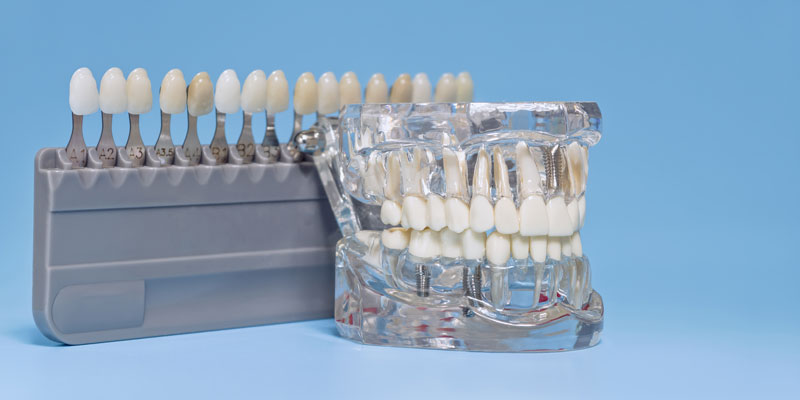
Understanding Dental Implant Abutments: A Guide to Successful Tooth Replacement
Dental implants in Louisville, KY, offer a stable, natural-looking way to replace missing or severely damaged teeth. By restoring both the appearance and function of a tooth, implant treatment can make it easier to chew, speak, and smile with confidence.
A complete dental implant restoration generally consists of three important parts:
- The implant post: A biocompatible post placed in the jawbone to act as an artificial tooth root.
- The abutment: A connector that attaches the implant post to the visible restoration.
- The restoration: A dental crown, bridge, or prosthetic arch designed to replace the visible portion of the missing tooth or teeth.
Although each component is essential, the dental implant abutment plays a particularly important role. It creates the connection between the implant beneath the gums and the final restoration above them. Its design, position, and material can influence the strength, comfort, function, and appearance of the completed smile.
What Is a Dental Implant Abutment?
A dental implant abutment is the small connecting component that sits between the implant post and the artificial tooth. After the post has been placed in the jawbone, it must become stable enough to support the restoration. This usually involves a healing process called osseointegration, during which the surrounding bone forms a secure connection with the implant surface.
Once the treatment area is ready, the abutment is attached to the implant. It extends through or slightly above the gumline, creating a stable foundation for the final crown, bridge, or full-arch prosthesis.
The abutment must be positioned precisely so the restoration fits securely and aligns comfortably with the patient’s bite. Careful planning also helps the replacement tooth blend naturally with the neighboring teeth and surrounding gum tissue.
How the Three Parts of a Dental Implant Work Together
The success of an implant restoration depends on all three components working together:
- The implant post provides support. It is placed in the jawbone and functions similarly to the root of a natural tooth.
- The abutment creates the connection. It transfers biting forces between the restoration and the implant while supporting the final tooth in the proper position.
- The crown restores the visible tooth. A custom restoration is designed to provide a natural shape, color, and function.
Patients interested in learning more about the visible portion of an implant restoration can explore our information about dental crowns and bridges.
Why Is the Implant Abutment Important?
The abutment does much more than hold the crown in place. It helps determine how the final restoration functions, feels, and looks.
It stabilizes the final restoration
A properly selected abutment provides secure support for the artificial tooth. This stability allows the restoration to withstand normal biting and chewing forces while minimizing unwanted movement.
It supports proper bite alignment
The shape and angle of the abutment help position the restoration correctly within the bite. Precise alignment is important for comfort and may help distribute pressure more evenly when a patient chews.
It influences the appearance of the new tooth
The abutment helps determine where the crown emerges from the gumline. This is especially important when replacing a visible front tooth, where even small differences in position or contour can affect the final appearance.
It helps shape the surrounding gum tissue
A thoughtfully designed abutment can support a healthy-looking gum contour around the restoration. Creating an appropriate emergence profile helps the replacement tooth transition naturally from the gums and blend with the surrounding smile.
Maintaining healthy gum tissue remains important after implant treatment. Patients with gum-health concerns may also benefit from learning about our approach to periodontal treatment in Louisville.
Custom Abutments vs. Stock Abutments
Dental implant abutments are commonly available in two categories: custom and stock. The appropriate option depends on the location of the implant, the patient’s anatomy, the type of restoration, and the desired cosmetic result.
Custom implant abutments
A custom abutment is designed specifically for an individual patient. Digital impressions, scans, and treatment-planning information may be used to create an abutment that fits the implant position and surrounding tissues precisely.
Custom abutments may be particularly helpful when:
- The implant is replacing a visible front tooth
- The position or angle of the implant requires correction
- The gumline needs individualized support
- A highly natural emergence profile is desired
- The available space differs from standard dimensions
Because a custom abutment is created for the patient’s unique anatomy, it can give the dental team greater control over the fit, contour, and appearance of the final restoration.
Stock implant abutments
Stock abutments are manufactured in a selection of standard shapes, heights, and sizes. They can provide an effective solution when the implant is favorably positioned and the surrounding anatomy accommodates a prefabricated component.
They are often considered for less visible areas, such as the back of the mouth, although the best choice must always be based on the individual treatment plan rather than location alone.
What Materials Are Used for Implant Abutments?
Implant abutments may be made from several materials. Each offers different functional and cosmetic characteristics.
Titanium abutments
Titanium is widely used in implant dentistry because of its strength, durability, and compatibility with the body. It is often selected for areas that experience significant chewing pressure.
Zirconia abutments
Zirconia has a tooth-colored appearance that can be beneficial in highly visible areas or when the surrounding gum tissue is thin. Its lighter color can help reduce the possibility of a gray tone showing through the gums.
Hybrid abutments
Some restorations use a combination of materials, such as a zirconia component supported by a titanium base. This approach may combine the cosmetic advantages of tooth-colored ceramic with the strength of a titanium implant connection.
The appropriate material depends on the implant system, location of the missing tooth, bite forces, gum thickness, restorative design, and aesthetic goals.
When Is the Abutment Placed?
The timing of abutment placement varies based on the patient’s treatment plan. In some cases, an abutment or healing component may be placed at the time of implant surgery. In others, the implant is covered during healing and the abutment is attached during a later appointment.
Factors that may affect the timeline include:
- The location and number of implants
- The condition of the jawbone
- Whether bone grafting is required
- The stability of the implant at placement
- The type of temporary or final restoration
- The patient’s overall health and healing response
Patients with significant bone loss may still have implant options. Our team provides advanced evaluations and offers solutions for patients with severe jawbone loss.
What Factors Affect Dental Implant Success?
The abutment is important, but successful implant treatment depends on the entire planning, surgical, restorative, and maintenance process. Important factors include:
- Bone quality and volume: The jaw must provide appropriate support for the planned implant.
- Accurate implant positioning: Placement affects the function, cleansability, and appearance of the final restoration.
- Appropriate abutment selection: The component must accommodate the patient’s anatomy, bite, implant position, and restorative goals.
- Precise restorative design: The crown or prosthesis must fit accurately and work comfortably with the patient’s bite.
- Healthy gums: The tissues surrounding the implant require ongoing care and monitoring.
- Consistent oral hygiene: Daily brushing, cleaning around the implant, and professional dental visits help protect the surrounding tissues.
- Patient health and habits: Medical conditions, tobacco use, teeth grinding, and other factors may affect healing and long-term stability.
How Do You Care for a Dental Implant Abutment?
The abutment is largely covered by the restoration and surrounding gum tissue, but plaque can still collect around the gumline. Good home care is therefore essential.
Patients should generally:
- Brush at least twice daily with a soft-bristled toothbrush
- Clean carefully around the implant and gumline
- Use floss, interdental brushes, or other tools recommended by the dental team
- Attend routine dental examinations and professional cleanings
- Report persistent tenderness, swelling, bleeding, looseness, or changes in the bite
- Wear a nightguard when recommended for grinding or clenching
While an implant restoration cannot develop a cavity, the gum and bone around it can still be affected by inflammation or infection. Consistent maintenance is one of the most important parts of protecting an implant over time.
Precision Implant Restorations at Harmon Dental Center
Dental implant treatment requires coordination between surgical planning and restorative design. At Harmon Dental Center, our team evaluates the implant, abutment, restoration, bite, gum tissue, and facial aesthetics as interconnected parts of the final result.
Our state-of-the-art dental laboratory supports detailed restorative planning and gives our team greater control over the design and quality of implant restorations. This personalized approach helps us create teeth that are designed to look natural, feel comfortable, and function confidently.
Dr. Bradley Harmon and the Harmon Dental Center team provide individualized implant care for patients with a wide range of tooth-replacement needs, from a single missing tooth to more complex full-mouth treatment.
Frequently Asked Questions About Implant Abutments
Is an abutment the same as a dental implant?
No. The implant is the post placed in the jawbone. The abutment attaches to that post and supports the crown or other final restoration.
Can an implant crown be placed without an abutment?
The restoration needs a secure connection to the implant. Depending on the implant system and restoration design, that connection may involve a separate abutment or a component incorporated into the restoration. Your dental team will determine the appropriate design.
Does placing an abutment hurt?
Patient experiences vary, but local anesthesia may be used when needed to maintain comfort. Some temporary gum tenderness can occur after the procedure. Your dental team will provide instructions based on your specific treatment.
Can a dental implant abutment become loose?
An abutment or its retaining screw can occasionally loosen. Contact the dental office promptly if the restoration moves, feels unstable, makes an unusual sound, or causes a sudden change in the bite. Avoid chewing on the affected area until it can be evaluated.
How long does a dental implant abutment last?
Implant components are designed for long-term use, but longevity depends on multiple factors, including the patient’s bite, oral hygiene, health, habits, and regular professional care. The restoration attached to the abutment may experience normal wear and could require maintenance or replacement over time.
How much does dental implant treatment cost?
Cost varies according to the number of missing teeth, the implant and restoration design, the need for additional procedures, and other individual factors. Visit our dental implant cost and affordability page to learn more about treatment and financing considerations.
Schedule a Dental Implant Consultation in Louisville, KY
If you are considering dental implants or have questions about an existing implant restoration, schedule a personalized consultation at Harmon Dental Center. We will evaluate your oral health, discuss your goals, and explain the treatment options suited to your needs.
Take the next step toward a complete, confident smile. Contact Harmon Dental Center or call (502) 325-3994 to request your consultation.