
Cheapest Dental Implants: What to Know Before You Buy
Searching for the cheapest dental implants is understandable. Replacing missing or failing teeth can be a major financial decision, and most patients want to control costs without sacrificing the health, comfort, or appearance of their smile.
However, the lowest advertised price is not always the lowest total cost. A bargain implant offer may exclude important parts of treatment, use unfamiliar components, provide limited follow-up care, or result in additional expenses later.
When comparing dental implant costs in Louisville, KY, it is important to look beyond the initial number. The better question is: What care, materials, technology, and long-term support are included in the price?
This guide explains what low-cost dental implant offers may include, what affects the final price, which hidden fees to watch for, and how to find affordable treatment without compromising quality.
What Does “Cheapest Dental Implants” Really Mean?
An unusually low advertised price may represent only one part of the treatment. For example, the quoted amount might cover the implant post but exclude the abutment, final crown, imaging, anesthesia, follow-up visits, or preparatory procedures.
In other cases, a lower price may reflect:
- Generic or less-established implant components
- Limited diagnostic imaging and treatment planning
- Prefabricated rather than customized restorations
- Reduced laboratory services
- Fewer post-operative appointments
- Temporary restorations that cost extra
- Care divided among several outside providers
- Limited warranties or complication coverage
None of these factors automatically means that treatment is inappropriate. However, patients should know exactly what is—and is not—included before agreeing to a low-price offer.
Important: Always ask for a written, itemized estimate showing the implant post, abutment, restoration, imaging, anesthesia, laboratory work, follow-up care, and any anticipated preparatory procedures.
What Determines the Cost of Dental Implants?
No single price applies to every implant patient. The total cost depends on the condition of your mouth, the number of teeth being replaced, the restoration selected, and the clinical resources required to complete treatment safely.
Number of teeth being replaced
Replacing one tooth is different from restoring several teeth or an entire arch. Common implant treatments may include:
- A single dental implant and crown
- Multiple individual implants
- An implant-supported bridge
- Implant-supported dentures
- Full-arch or full-mouth implant treatment
The number and position of the implants, along with the size and design of the final restoration, will affect the overall investment.
Implant and restoration materials
The implant post, connecting abutment, and visible restoration may be made from different materials. Titanium is commonly used for implant posts because of its strength and extensive history in implant dentistry. Zirconia may be considered in certain situations based on the treatment plan and cosmetic goals.
The final crown, bridge, or implant-supported prosthesis also affects cost. Material quality, customization, laboratory techniques, and the number of teeth included in the restoration all influence the final fee.
Bone grafting or other preparatory care
A dental implant needs adequate bone for support. When bone volume has decreased because of long-term tooth loss, infection, trauma, or gum disease, an additional procedure may be recommended.
Preparatory treatment can include:
- Tooth extraction
- Bone grafting
- Sinus augmentation
- Treatment for active gum disease
- Removal of infected or failing dental work
These procedures increase the initial cost, but they may be necessary to create a healthier and more stable foundation for implant placement.
Diagnostic imaging and digital planning
Dental implant surgery requires a clear understanding of the jawbone, nerves, sinuses, and surrounding anatomy. A three-dimensional cone-beam computed tomography scan, commonly called a CBCT scan, can provide information that conventional two-dimensional images may not show.
Digital scans and surgical planning technology can also help determine implant position and guide the design of the final restoration. When comparing estimates, ask whether this diagnostic and planning work is included.
Provider training and experience
A dental professional’s implant training, surgical experience, restorative skills, and continuing education may affect treatment fees. Price should not be the only consideration when evaluating who will place and restore your implants.
Ask prospective providers:
- How often do you perform dental implant procedures?
- Will one team manage both surgery and restoration?
- Can I view examples of cases similar to mine?
- Which implant systems do you use?
- How do you plan for complications or unexpected findings?
- What follow-up care is included?
Dental laboratory services
The laboratory creates the visible teeth attached to the implants. The restoration’s design, fit, bite, shape, shade, and materials can significantly affect comfort and appearance.
Some practices send all restorative work to an outside laboratory, while others have greater control over the process through an on-site dental laboratory. In-house capabilities may help streamline communication, reduce outside coordination, and make certain adjustments more efficient.
Sedation and surgical facility costs
The appropriate comfort option depends on the procedure and the patient. Local anesthesia may be sufficient for some cases, while patients with dental anxiety or more extensive treatment may benefit from additional sedation dentistry options.
Ask whether anesthesia or sedation is included in the estimate and who will administer and monitor it.
Common Hidden Dental Implant Costs
Advertisements may display a starting price without showing the total cost of completing the tooth. Before accepting an estimate, determine whether it includes every anticipated stage of care.
Potential additional expenses can include:
- Initial examination and consultation
- Dental X-rays or CBCT imaging
- Digital impressions or intraoral scans
- Tooth extractions
- Bone grafting or sinus procedures
- The implant post
- The implant abutment
- A temporary tooth or provisional prosthesis
- The final crown, bridge, or full-arch restoration
- Laboratory and material fees
- Surgical guides
- Sedation or anesthesia
- Post-operative visits
- Adjustments after delivery
- Maintenance or repair of the restoration
Ask the practice to identify which costs are confirmed, which are estimates, and which could change depending on findings during treatment.
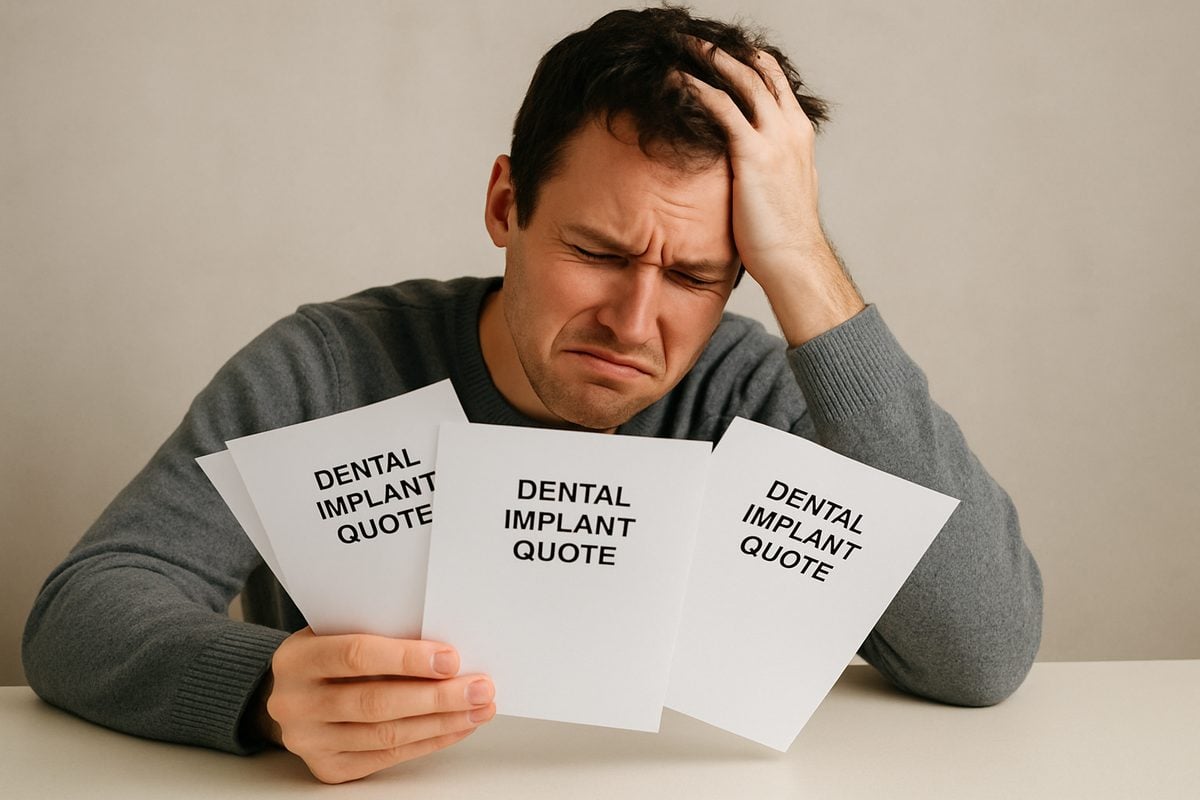
How to Compare Dental Implant Quotes
Dental implant proposals are difficult to compare when one provider quotes a single bundled fee and another lists every part separately. Request an itemized treatment plan from each practice so you can make an accurate comparison.
Ask what is included in the advertised price
Find out whether the quoted price covers only the implant post or the complete restored tooth. A complete single-tooth treatment generally involves the implant, abutment, and crown, along with the related diagnostic, surgical, and restorative care.
Ask which implant system will be used
Request the implant manufacturer and product information. Using an established system may make replacement parts, maintenance, or future restorative care easier to manage.
Ask who will make your final teeth
Learn whether your crown, bridge, or full-arch prosthesis will be created by an outside laboratory, an overseas laboratory, or an in-house team. Ask how the provider controls fit, materials, appearance, and quality.
Ask how many appointments are anticipated
The number of visits may affect time away from work, travel expenses, and the practical cost of treatment. Ask how many appointments are normally required from the initial evaluation through placement of the final restoration.
Ask about follow-up and maintenance
Confirm how long post-operative care is included, what happens if an adjustment is needed, and whether the practice offers ongoing implant maintenance.
Ask about warranties carefully
A warranty may apply only to specific parts of treatment and may depend on regular hygiene appointments, use of a protective appliance, or compliance with home-care instructions.
Request the terms in writing and determine:
- Which components are covered
- How long coverage lasts
- Which circumstances are excluded
- Whether laboratory or surgical fees would still apply
- What maintenance is required to keep the warranty valid
Red Flags in Extremely Low-Cost Implant Offers
A low price does not automatically indicate poor care. However, certain warning signs deserve closer examination.
Proceed cautiously when a provider:
- Recommends surgery without appropriate diagnostic imaging
- Cannot provide a complete written treatment plan
- Will not identify the implant manufacturer or materials
- Uses pressure tactics or demands immediate payment
- Offers the same treatment plan to nearly every patient
- Provides little information about follow-up care
- Cannot explain who will create the final restoration
- Makes unrealistic promises or guarantees
- Does not discuss risks, alternatives, or maintenance
- Cannot show relevant training or previous implant cases
Implant treatment should begin with a thorough evaluation and a plan based on your anatomy, health, goals, and budget—not an advertisement alone.
How to Make Dental Implants More Affordable
Affordable treatment does not have to mean choosing the lowest-quality option. Several strategies may help make care more manageable while preserving important diagnostic, surgical, and restorative standards.
Explore dental financing
Qualified patients may be able to divide the cost of treatment into monthly payments rather than paying the entire amount at once. Visit our insurance and dental financing page to learn about available payment resources.
Use available insurance benefits
Dental insurance coverage varies considerably. Some plans may contribute toward extractions, diagnostic imaging, grafting, crowns, or other portions of treatment even when implant placement is not fully covered.
Ask the dental team to review your benefits and provide an estimate of your expected out-of-pocket responsibility.
Consider phased treatment
Some treatment plans can be completed in stages. Phasing care may distribute expenses over a longer period, although it can also extend the overall timeline. Your provider can explain whether this is clinically appropriate for your situation.
Review HSA or FSA eligibility
Eligible patients may be able to use health savings account or flexible spending account funds for qualifying dental expenses. Check the rules of your specific account and speak with a tax professional or plan administrator when necessary.
Ask about alternative treatment options
Dental implants may be the preferred treatment for many patients, but they are not the only way to replace teeth. Depending on your needs, alternatives can include a traditional bridge, removable partial denture, or conventional full denture.
Ask your dentist to explain the initial expense, expected maintenance, advantages, limitations, and long-term costs of each option.
Seek a second opinion
A second evaluation can be valuable when the proposed treatment is extensive, the estimate is unclear, or recommendations differ significantly between providers.
Bring copies of your imaging, records, and written treatment plan when possible. A second provider can then explain whether the proposed procedures appear appropriate and which alternatives may be available.
Cheapest vs. Best Long-Term Value
The cheapest implant on the day of surgery may not provide the best value over the life of the restoration. Future costs may arise when an implant is poorly positioned, the restoration does not fit properly, replacement components are difficult to obtain, or follow-up care is limited.
Long-term value involves more than durability. It also includes:
- Careful diagnosis and treatment planning
- Reliable implant components
- Accurate placement
- A comfortable and balanced bite
- A natural-looking restoration
- Healthy surrounding gums and bone
- Accessible follow-up care
- A clear maintenance plan
The goal should be to find a provider who offers transparent pricing and appropriate care—not simply the smallest advertised number.
How Harmon Dental Center Delivers Implant Value
At Harmon Dental Center, dental implant treatment is planned around each patient’s oral health, anatomy, restorative needs, and goals. Dr. Bradley Harmon and our team use advanced technology to help coordinate the surgical and restorative phases of care.
Our implant capabilities include:
- Three-dimensional CBCT imaging
- Primescan® digital impressions
- Primemill® chairside milling
- In-house 3D printing
- An on-site full-mouth dental implant laboratory
- Private surgical facilities
- Multiple sedation and anesthesia options
Keeping many stages of care within one practice can support clearer communication, efficient treatment planning, and greater control over the design of the final restoration.
Patients can learn more about our comprehensive approach on our Louisville dental implants page.
Questions to Ask at Your Implant Consultation
Bring this checklist when meeting with an implant provider:
- What is the total estimated cost from consultation through the final teeth?
- Does the estimate include the implant, abutment, and restoration?
- Will I need extractions, grafting, or other preparatory procedures?
- Are CBCT imaging and digital planning included?
- Which implant brand and restorative materials will you use?
- Who will perform the surgery?
- Who will design and fabricate the final teeth?
- How many appointments should I expect?
- Will I receive temporary teeth during healing?
- Which sedation options are available, and are they included?
- What follow-up care is included?
- What happens if an implant or restoration develops a problem?
- Are financing or phased-treatment options available?
Frequently Asked Questions About Affordable Dental Implants
How much are the cheapest dental implants?
Advertised starting prices vary, but they may represent only one component of treatment. A personalized estimate should account for the implant post, abutment, restoration, imaging, surgery, laboratory work, anesthesia, follow-up care, and any necessary preparatory procedures.
Why do dental implant prices vary so much?
Prices vary because patients require different numbers of implants, restoration types, materials, diagnostic services, preparatory procedures, and levels of surgical complexity. Provider experience, laboratory services, technology, and geographic location can also affect cost.
Does dental insurance cover implants?
Coverage depends on the individual plan. Some policies contribute to certain stages of treatment, while others exclude implants or apply annual maximums and waiting periods. A benefits review can help clarify possible coverage.
Can dental implants be financed?
Financing may be available to qualified patients through third-party lenders or other payment arrangements. Terms, approval requirements, interest, and repayment periods vary.
Are cheap dental implants safe?
A low price alone does not determine whether treatment is safe. Safety and predictability depend on diagnosis, planning, provider qualifications, implant components, surgical technique, restorative quality, sterilization standards, and follow-up care.
Is getting dental implants abroad less expensive?
Treatment in another country may have a lower advertised price, but patients should also consider travel, lodging, repeat visits, provider credentials, implant-system availability, complication care, warranty enforcement, and access to long-term maintenance after returning home.
Should I get more than one dental implant quote?
Obtaining another opinion can help you compare recommendations, inclusions, materials, timelines, and total costs. Make sure each provider is evaluating the same condition and proposing a comparable type of restoration.
Request a Dental Implant Cost Consultation in Louisville, KY
You deserve to understand the complete cost and expected value of treatment before making a decision. At Harmon Dental Center, our team can evaluate your oral health, review your options, and provide a personalized treatment proposal.
Bring any recent dental records, X-rays, written estimates, or treatment plans to your visit. We can also provide a second opinion when you have already received a proposal from another practice.
Find out which implant solution fits your health, goals, and budget. Contact Harmon Dental Center or call (502) 325-3994 to schedule a consultation.