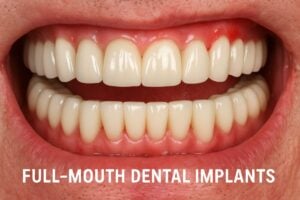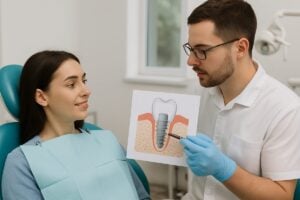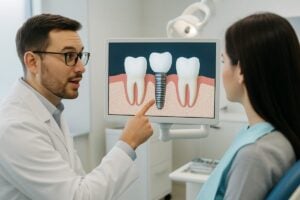
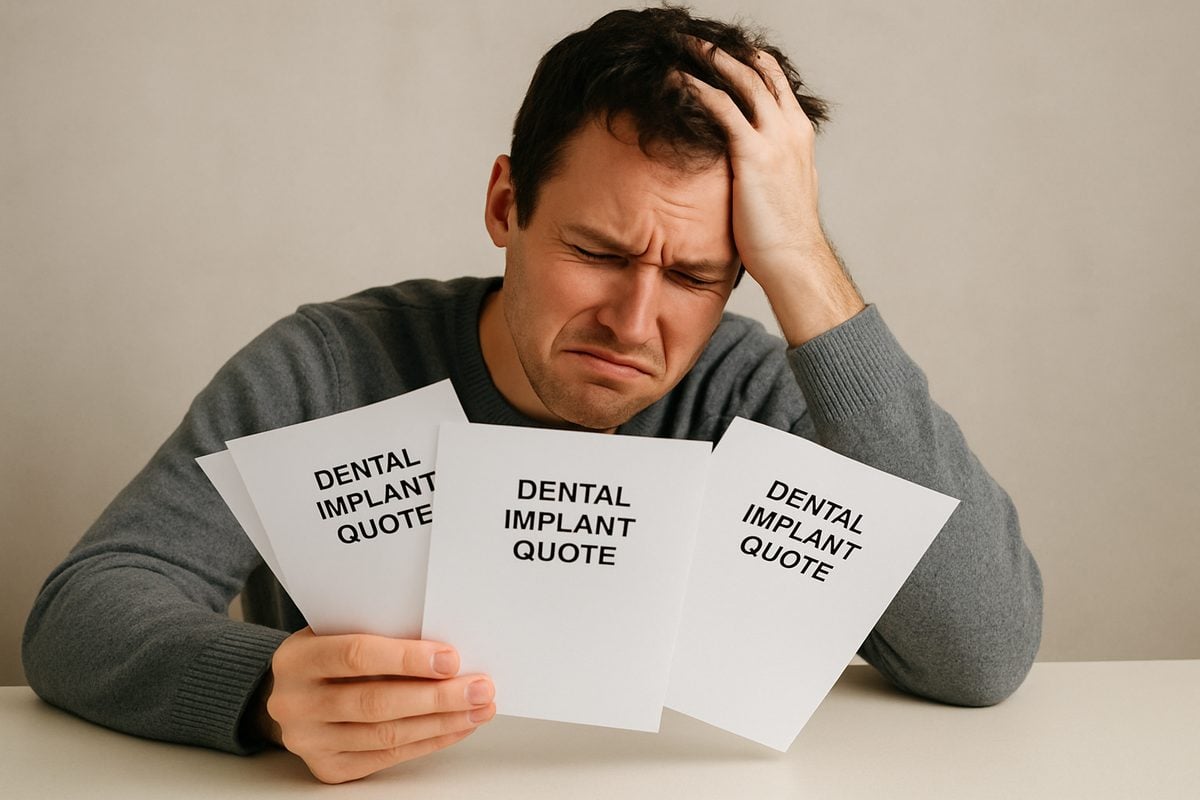
Many patients search for “the cheapest dental implants” hoping to save money. Low sticker prices can be tempting, but dental implants are a long-term treatment. Choosing solely on price can mean extra visits, surprise fees, or repairs later. This guide explains what cheap dental implants usually mean, the real costs to watch for, how to compare quotes, safe ways to reduce cost, and when a low price is a red flag.
What “the cheapest dental implants” usually mean
Often it means a lower upfront price that may skip parts of care. That can include cheaper dental implant parts, fewer follow-up visits, use of generic components, or limited lab work. Sometimes the price doesn’t include imaging, temporary tooth crowns, or bone grafts. A low sticker price can be missing steps that affect fit, comfort, and how long the dental implant lasts.
Key factors that drive dental implant cost
Type of dental implant and materials
A single dental implant is usually cheaper than multiple dental implants or a full-arch solution. Titanium dental implants are common and well-studied; zirconia is an alternative with a different cost profile. Higher-quality materials and proven dental implant brands usually cost more but tend to have better long-term records.
Extent of treatment needed
Extra work like bone grafts, sinus lifts, extractions, or treating infection raises the price. If bone is thin from long-term tooth loss, you may need grafts before a dental implant can be placed.
Provider experience and facility
Specialists and dentists with more dental implant training may charge more. Clinics with surgical suites, sedation options, in-house labs, or advanced imaging also have higher fees. Those investments can reduce complication risks and additional visits.
Common hidden costs to watch for
Follow-up visits, temporary restorations, CBCT scans (3D imaging), surgical guides, lab fees, crown adjustments, and treatment for complications are often not in the initial quote. Ask whether the price is total “out-the-door” cost.
How to compare dental implant quotes the smart way
Ask for an itemized quote. Ask the dental implant brand and who makes the tooth crown (local lab or overseas). Ask how many visits are required, whether CBCT imaging is included, and what sedation is available. Request the surgeon’s experience and complication rates, warranty or guarantee details, and before/after photos or references.
Safe ways to reduce cost without risking your outcome
Consider phased treatment (spread costs over time), in-office financing, using FSAs or dental insurance when applicable, and choosing value over the lowest price. Practices with in-house labs or same-day restorations may lower repeat visits and overall cost. Shop for providers who balance quality and price.
Red flags: when the cheapest option is dangerous
No CBCT or proper imaging, no written treatment plan, unknown dental implant systems, minimal follow-up care, pushy payment demands, or very short guarantees are warning signs. Avoid clinics that cannot show clear records of successful dental implant cases.
Why a modern dental implant practice can save money long-term
A practice that invests in technology and experience can reduce complications and repeat costs. Dr. Bradley Harmon and Harmon Dental Center focus on lasting results. Their on-site full-mouth lab, Primescan® digital impressions, Primemill® same-day milling, CBCT imaging, in-house 3D printers, and a fully equipped surgical suite with sedation help deliver accurate, efficient care and fewer surprises.
Learn How to Get the Cheapest Dental Implants
Contact us to schedule a consult and bring past dental records. Request an itemized quote and ask about financing and warranty terms. Compare at least two reputable providers before choosing the cheapest option. If you want a second opinion, go to Harmon Dental Center to review your plan and costs.